
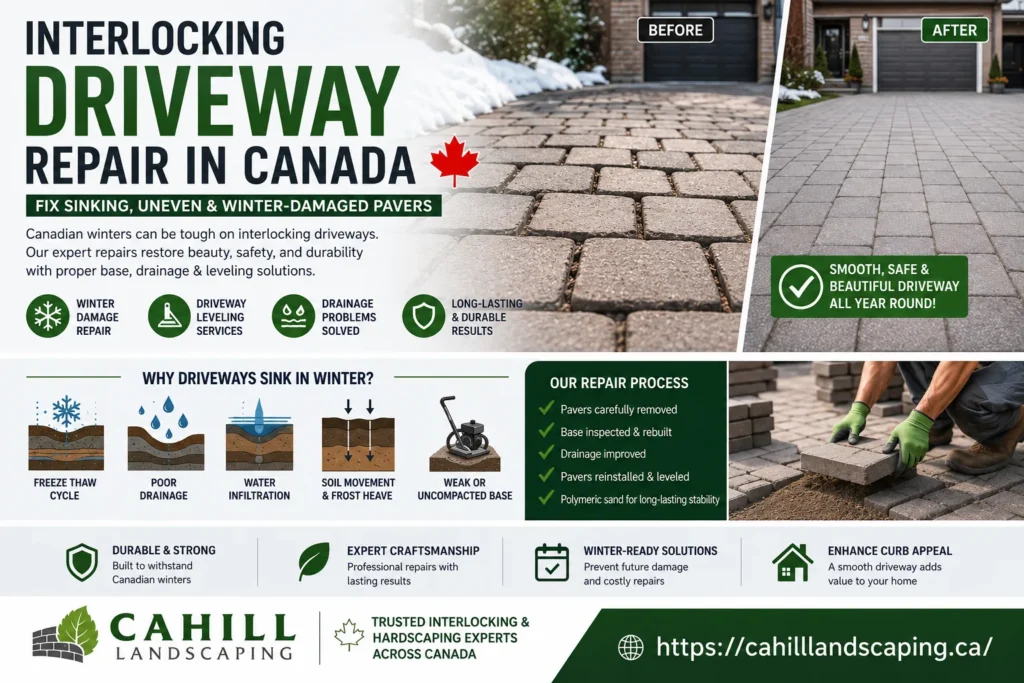
Canadian winters can be harsh on outdoor surfaces, especially interlocking driveways. From freeze thaw cycles to poor drainage and soil movement, homeowners across Canada often deal with uneven paver driveways, sinking sections, and shifting stones after winter. Understanding the causes behind these issues is the first step toward protecting your investment.
Professional interlocking driveway repair not only restores curb appeal but also prevents long-term driveway foundation issues caused by water infiltration, frost heave, and erosion under pavers. Whether you need driveway leveling services, paver stone driveway repair, or winter maintenance tips, this guide explains everything homeowners need to know.
Why Do Interlocking Driveways Sink in Winter?
One of the most common questions homeowners ask is: why do interlocking driveways sink in winter?
The answer usually comes down to moisture and temperature changes. During Canadian winter weather, water enters small gaps between pavers. When temperatures drop, the water freezes and expands. This process is known as the freeze thaw cycle.
Common Causes of Sinking Driveways
- Poor drainage under the driveway
- Improper or weak base installation
- Soil movement in winter
- Water infiltration beneath pavers
- Frost heave and ground expansion
- Erosion under pavers
- Melting snow damage
- Lack of compacted base layers
When the soil beneath the driveway shifts or weakens, pavers begin settling unevenly. Over time, this creates trip hazards, pooling water, and visible paver shifting.
Signs Your Interlocking Driveway Needs Repair
Recognizing problems early can save thousands in future repairs.
Watch for These Warning Signs
| Problem | What It Means |
|---|---|
| Uneven paver driveway | Base settlement or soil movement |
| Pooling water | Driveway drainage problems |
| Loose or shifting pavers | Weak polymeric sand or erosion |
| Cracks between pavers | Freeze thaw damage to pavers |
| Sunken driveway sections | Compacted base failure |
| Ice buildup in low spots | Improper driveway surface leveling |
If ignored, these issues can shorten driveway lifespan and lead to expensive reconstruction.
What Causes Pavers to Shift in Winter?
Many homeowners wonder: why are my driveway pavers uneven after winter?
Winter conditions place constant stress on interlocking systems. As moisture freezes and thaws repeatedly, the ground expands and contracts.
Major Winter Factors
1. Frost Heave
Frost heave occurs when frozen moisture pushes the soil upward. Once the ice melts, the ground settles unevenly.
2. Poor Drainage
Driveway drainage issues in winter allow water to collect beneath pavers, weakening the base layer.
3. Weak Base Materials
Without proper base installation, heavy snow loads and freezing temperatures accelerate driveway settling.
4. Snow Removal Damage
Metal shovels and snowplows can loosen pavers and remove polymeric sand from joints.
How to Fix a Sinking Interlocking Driveway
Professional driveway repair contractors typically follow a proven restoration process.
Step-by-Step Interlocking Driveway Repair Process
1. Remove the Sunken Pavers
Contractors carefully lift the affected pavers without damaging surrounding areas.
2. Inspect the Base Layer
The underlying foundation is checked for moisture buildup, erosion, or inadequate compaction.
3. Rebuild the Foundation
New aggregate material is added and compacted properly to create a stable base.
4. Improve Drainage
Drainage corrections may include:
- Regrading
- Installing drainage channels
- Adjusting slope angles
- Adding permeable layers
5. Reinstall and Level Pavers
The pavers are reset evenly and compacted for a smooth finish.
6. Apply Polymeric Sand
Fresh polymeric sand locks pavers together and reduces water penetration.
This process helps stop driveway pavers from sinking again in future winters.
Best Base for Interlocking Driveways in Canada
The durability of an interlock driveway installation depends heavily on the base structure.
Recommended Base Layers
| Layer | Purpose |
|---|---|
| Crushed stone base | Drainage and stability |
| Granular aggregate | Weight distribution |
| Bedding sand | Paver leveling |
| Polymeric sand | Joint stabilization |
In Canada, the best base for interlocking driveways usually includes deep compacted aggregate layers designed for freeze thaw resistance.
A properly compacted base reduces:
- Paver shifting
- Moisture buildup
- Frost heave
- Driveway foundation issues
Interlocking Driveway Repair Cost in Canada
Repair costs vary depending on damage severity, driveway size, and drainage conditions.
Average Repair Costs
| Service | Estimated Cost |
|---|---|
| Minor paver leveling | $8–$15 per sq. ft. |
| Sunken paver repair | $15–$30 per sq. ft. |
| Full driveway restoration | $5,000–$15,000+ |
| Drainage correction | $1,500–$5,000 |
| Polymeric sand replacement | $2–$5 per sq. ft. |
Factors affecting cost:
- Extent of water damage
- Base replacement needs
- Accessibility
- Existing drainage problems
- Winter damage severity
Hiring experienced interlocking contractors Canada homeowners trust can help avoid recurring repairs.
Interlocking Driveway Problems and Solutions
Problem: Water Pooling
Solution: Improve grading and drainage systems.
Problem: Loose Pavers
Solution: Replace polymeric sand and compact surface.
Problem: Sunken Areas
Solution: Rebuild the compacted base beneath affected sections.
Problem: Paver Cracking
Solution: Replace damaged stones and correct moisture infiltration.
Problem: Ice Formation
Solution: Address low spots and improve water runoff.
Interlocking Driveway Winter Maintenance Tips
Proper maintenance extends the lifespan of your driveway significantly.
Best Winter Maintenance Practices
Use Plastic Snow Shovels
Avoid metal edges that can scratch or dislodge pavers.
Apply Ice Melt Carefully
Choose paver-safe deicing products to prevent surface damage.
Keep Drainage Areas Clear
Blocked drains increase water infiltration and freeze damage.
Refill Polymeric Sand
Fresh joint sand helps stabilize pavers before winter.
Schedule Annual Inspections
Professional inspections can identify early signs of driveway settling.
Following these interlocking driveway winter maintenance tips helps reduce future repair costs.
How Long Do Interlocking Driveways Last?
A professionally installed and maintained interlocking driveway can last:
- 25–40 years or more
- Even longer with proper drainage and seasonal maintenance
Compared to asphalt, interlocking pavers often perform better during Canadian winters because individual stones can be repaired without replacing the entire driveway.
This makes interlocking one of the best driveways for Canadian winters.
Should You Repair or Replace Your Driveway?
Repair Is Best When:
- Damage is localized
- Most pavers remain intact
- Drainage issues are minor
- The base is mostly stable
Replacement Is Better When:
- Large sections are sinking
- The foundation has widespread failure
- Drainage design is poor
- The driveway is very old
An experienced hardscaping contractor can assess the condition and recommend the most cost-effective option.
FAQ Section (People Also Ask Style)
Why do interlocking driveways sink in winter?
Interlocking driveways sink because moisture freezes beneath the surface, causing frost heave, soil movement, and erosion under pavers.
How do you fix a sinking interlocking driveway?
Contractors remove affected pavers, rebuild the compacted base, improve drainage, and reinstall the pavers evenly.
What causes pavers to shift in winter?
Freeze thaw cycles, poor drainage, weak foundations, and water infiltration are the most common causes.
Can snow damage interlocking pavers?
Yes. Snowplows, ice melt chemicals, and repeated freezing can loosen pavers and wash away polymeric sand.
How long do interlocking driveways last in Canada?
Most interlocking driveways last 25–40 years with proper installation and regular maintenance.
What is the best base for interlocking driveways in Canada?
A deep compacted crushed stone and aggregate base designed for freeze thaw resistance works best.
How much does interlocking driveway repair cost in Canada?
Minor repairs may cost a few hundred dollars, while full restorations can exceed $10,000 depending on damage severity.
Conclusion
Canadian winters can be tough on interlocking driveways, but most problems are preventable with proper installation, drainage, and seasonal maintenance. Issues like frost heave, driveway settling, and paver shifting usually start beneath the surface, making early repairs essential.
Professional interlocking driveway repair helps restore safety, appearance, and long-term durability. Whether you need driveway leveling services, paver driveway repair, or drainage corrections, investing in quality workmanship today can prevent major reconstruction costs later.
For the best results, work with experienced driveway repair contractors who understand Canadian winter weather, proper base installation, and long-lasting hardscape durability.